
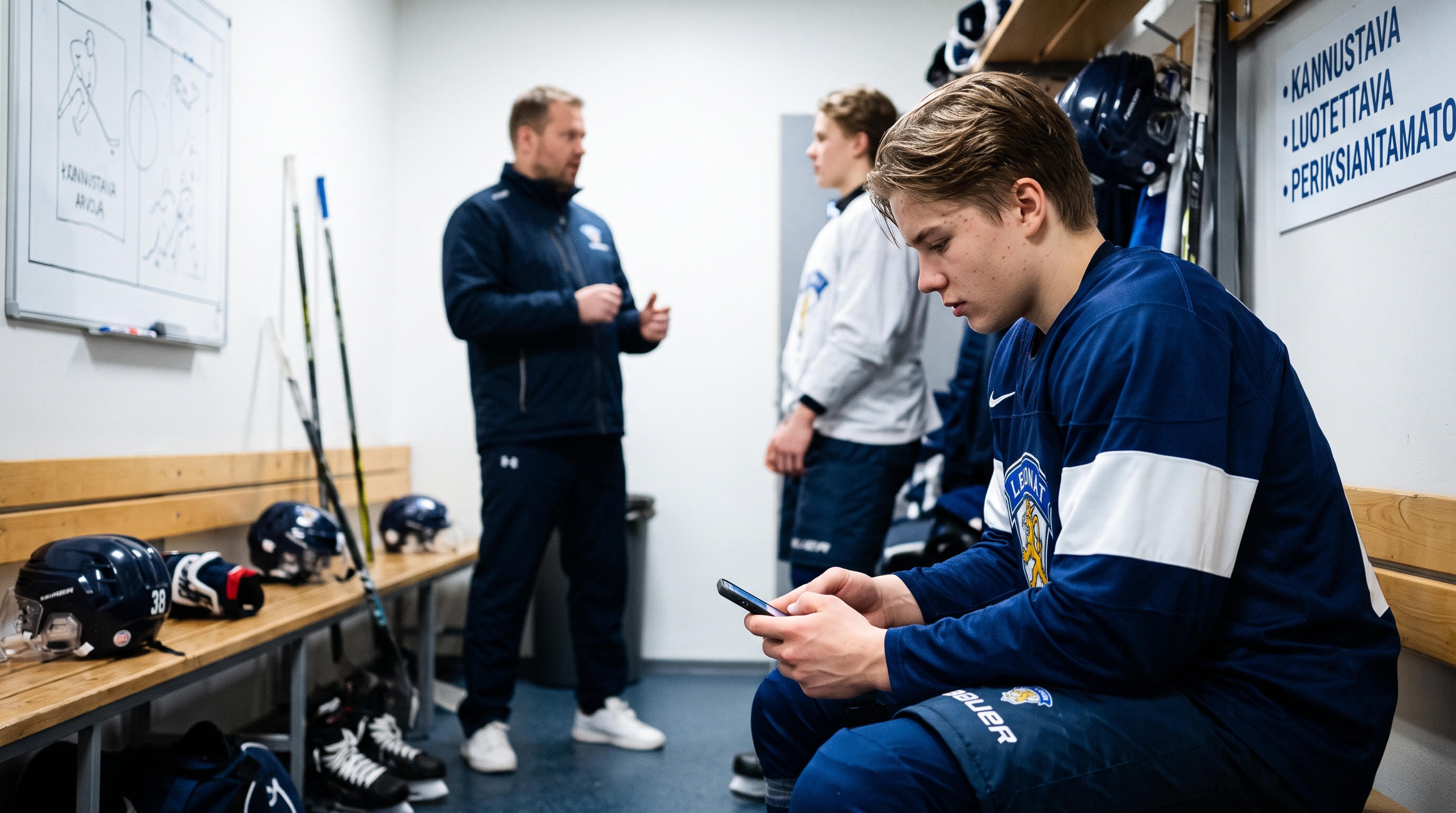
What did I learn from my performance? Why did something work, and what could I do differently next time? Learning to ask these questions helps players take a more active role in their development. In a Hockey Centre webinar, Tuomo Ropo and Toni Kähkönen explored how coaches can support this process, with practical insights from youth international hockey.
Recognising what happened during a game is a useful starting point. Understanding why it happened—and deciding what to do next—takes reflection a step further.
These skills can help players make better use of their experiences, engage in more meaningful conversations with coaches and bring clearer intentions into everyday practice.
Players differ in how easily they recognise and explain their own actions. Some can describe their performance in detail, while others need questions and support to get started.
Reflection can be practised. Coaches can help players notice relevant moments, explore what influenced them and identify actions within their control.
The questions do not need to be complicated:
The aim is to help players understand their performance and use that understanding to guide their next steps.
A player might recognise that defending a particular situation was difficult. That observation becomes more useful when the player and coach explore what contributed to it.
Was it positioning, timing, awareness or preparation? What could the player focus on in training?
A conversation can turn a broad assessment into a specific action. For example, a player might decide to check their surroundings earlier or pay closer attention to the distance between themselves and an opponent.
When players help identify and express their next steps, they have an opportunity to understand the purpose behind them. The coach supports the thinking process through questions, feedback and shared observations.
The timing of self-assessment deserves attention. Immediately after a game, the result and the emotions surrounding it can strongly influence how players judge their performance.
Allowing some distance from the event can help players look beyond the result and consider their own actions more calmly.
There is no single schedule that suits every team or situation. A brief immediate response and a later conversation may serve different purposes. Coaches can choose an approach that fits the players’ age, the context and the purpose of the assessment.
A player’s assessment gives the coach a window into how that player understands the game and their own performance.
Differences between a coach’s observations and a player’s experience can create valuable opportunities for discussion. They may also help the coach recognise where instructions or goals need further explanation.
Self-assessment becomes especially useful when players can see how their responses connect to feedback, practice and development.
Returning to earlier observations helps maintain that connection. What did the player try? What changed? What still needs attention?
Reflection can extend beyond individual performance. Players’ experiences also offer useful insight into the team environment.
Questions about support, trust and shared expectations can help coaches understand how the team’s values are experienced in everyday situations.
What does supporting a teammate look like in practice? Can players ask for help? How does the team respond when things become difficult?
Discussing these questions gives shared values a practical meaning and creates opportunities for players to contribute to the environment around them.
In the webinar, Kimmo Koskenkorva demonstrated how Hockey Centre can support self-assessment and reflection in everyday coaching.
Coaches can use ready-made assessment templates or create questions around their team’s goals. Rating scales can be combined with written comments, giving players space to explain their experiences.
Players respond through the app, and coaches can review responses at both individual and team level. Repeated assessments help coaches and players follow changes over time.
Players can also return to their previous responses, keeping their observations available for future conversations and helping them review their own development.
A useful starting point is one clear focus linked to a current development goal. Ask players to reflect on it, discuss their responses and agree on a manageable next step.
Players do not need to produce perfect answers. Regular opportunities to pause, think and talk about their experiences give them practice in a skill they can use throughout their sporting lives.
With support, reflection can become part of how players prepare, practise and learn—helping them take greater ownership of their development.
Based on a Hockey Centre webinar with coaches Tuomo Ropo and Toni Kähkönen, with a practical demonstration by Kimmo Koskenkorva.
The image accompanying this blog post was created using AI.